
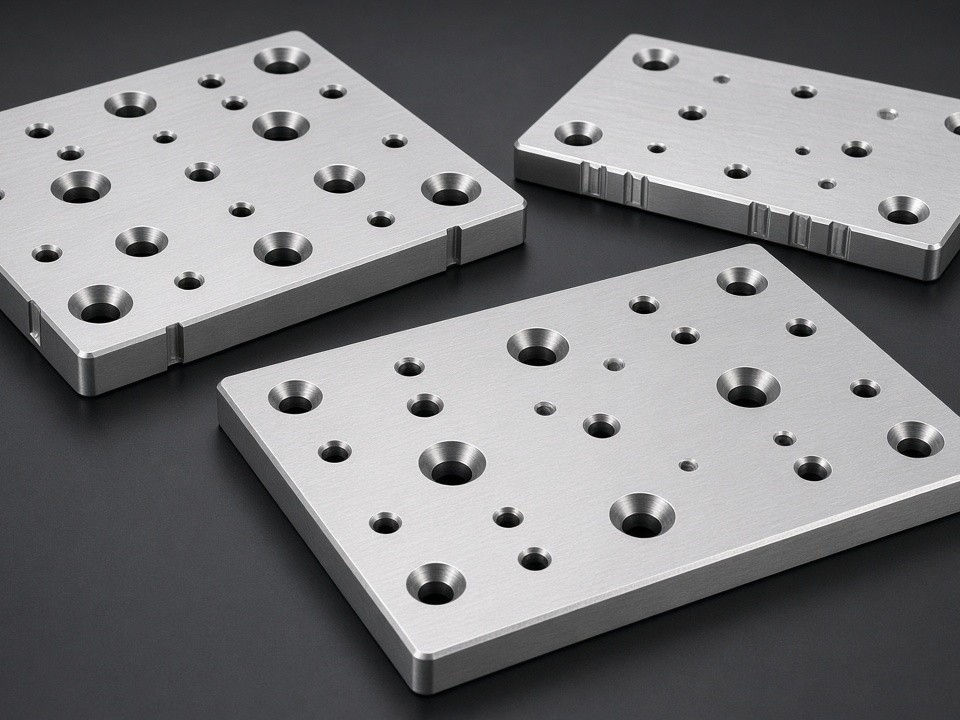
Precision Mounting Plates
Flat plates with coordinated hole patterns for fixtures, robot bases, and optical breadboards.
Request QuotePlate applications buyers quote
Robot base plates
Bolt patterns that match arm pedestals and floor anchors—dowels optional for repeatable cell moves.
Fixture decks
Dowel + tapped grids for repeatable workholding on mills, weld cells, and assembly jigs.
Optical breadboard adapters
Imperial/metric hole mixes with flatness control for lab benches and photonics carts.
Machine frames
Stiff plates tying extruded frames, gearboxes, and linear rails into one datum.
Test stands
Sensor and actuator mount plates for R&D benches—iterate holes without remaking the whole stand.
Change parts
Quick-swap plates for packaging format changes; tag holes and keep a spare set on the shelf.
Conveyor & guard mounts
Slot patterns for alignment on install; powder coat when the plate is operator-visible.
Battery / electronics trays
Aluminum plates with standoff patterns and cable tie-downs for mobile equipment.
Plate DFM tips
- •Dimension hole patterns from a single datum scheme—avoid stacked dimensions that fight each other on a large plate.
- •Specify flatness separately from thickness tolerance when the plate is a reference plane for rails or robots.
- •Call out countersink angle/diameter and which side faces up; wrong-side countersinks are a painful reship.
- •For thick steel plates, ask about stress relief before finish milling if flatness is tight.
- •Slot vs hole: use slots only where adjustment is real—every slot costs time versus a drilled hole.
- •Send DXF or STEP of the hole map; screenshots of a spreadsheet grid waste quote time and invite errors.
Mounting plate specs we manufacture to
Pattern & flatness QC
- ✓Critical hole positions verified to the datum scheme on the print.
- ✓Thread gauges on tapped holes for production lots.
- ✓Flatness check when specified—especially robot bases and rail plates.
- ✓Finish cosmetic review on anodized/powdered visible plates.
Lead time by size & finish
Small aluminum plates with simple hole maps are often among the fastest housing-family jobs. Large steel plates, tight flatness, and powder coat add schedule. Batching identical plates (5–20) amortizes programming and fixture time—ask for a quantity break on cell rollouts.
Mounting plate FAQ
Can you match a robot OEM bolt pattern?
Yes—send the OEM drawing or a measured template. We’ll lock datums so spare plates drop onto the same anchors.
Do you countersink and tap in the same setup?
Usually yes for plate work, which helps positional accuracy. Very thick plates may sequence differently; we’ll note it if so.