Robot Joint Housings
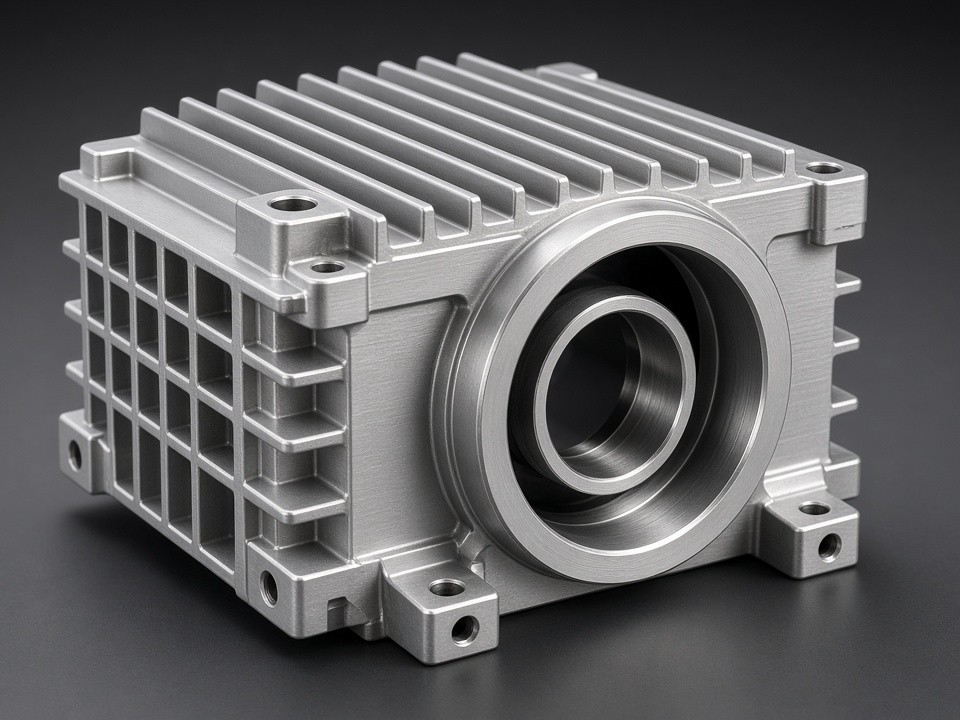
Pocketed shells for harmonic/planetary stages, bearing seats, and cable exits in collaborative and industrial arms.
Built for joint assemblies
- ✓Bearing bores held to fit class on the drawing (H7/g6 etc.)
- ✓Pocketed walls for stiffness-to-weight without mystery thin spots
- ✓Cable/air pass-throughs and connector pockets as modeled
- ✓Dowel holes for repeatable joint stack-up across spares
- ✓Anodize or paint-ready surfaces with fit masking available
- ✓Insert ready: Helicoil / threaded inserts quoted when called out
- ✓5-axis access for undercuts when 3-axis would force extra ops
Robot joint housing ranges
| Machining | Tolerances & fits | Materials & finishes | Quote package |
|---|---|---|---|
| 3-axis & 5-axis milling for compound pockets | Bearing bores: to H7/g6 (or as printed) | Aluminum 6061-T6 / 7075-T6 | STEP + PDF with bearing callouts |
| Boring / interpolate for bearing fits | Dowel holes: positional tolerance as drawn | Mild steel; stainless 304/316 | Seal and connector cutout references |
| Helicoil / threaded inserts on request | General milling: ±0.05–0.1 mm typical unless tighter | Cast preform machining when you supply blanks | Finish + masking notes |
| Deep pocketing with modeled internal radii | Flatness on mounting faces per print | Clear or black anodize; hardcoat on wear faces | Qty and revision (A/B/C) for iteration pricing |
| Face milling for sealed mating planes | Seal groove width/depth held for O-ring crush | Powder coat or paint-ready prep | Any mating gear/housing for stack check |
| Drill/tap maps for covers, sensors, and harness clamps | CMM reports available on critical seat stacks | Passivation for stainless; masking for fits | Target FAI or CMM scope |
What buyers get on a joint-housing quote
- Shells for harmonic, cycloidal, or planetary joint stages—machined from billet or plate for prototypes, or from your cast preform when you have one.
- Typical materials: 6061-T6 and 7075-T6 for cobot weight targets; mild steel or stainless when stiffness, weldments, or washdown drive the choice.
- We quote bearing seats, seal grooves, and mating faces as functional features—not just “pockets”—so DFM catches impossible tool reach early.
- Cable exits, strain-relief bosses, and connector windows are milled to your connector vendor’s cutout when you share the datasheet.
- Prototype joints through low-volume production runs; same traveler can carry first-article CMM on seats that set preload.
- Secondary: clear/black anodize, powder, passivation, bead blast, and masked bearing diameters so coating doesn’t kill the fit.
- If you’re iterating wrist or elbow castings, we can machine soft tooling blanks while you wait on foundry lead time.
Joint housing FAQ
Can you machine from a cast preform?
Yes—if you supply the casting or a reliable blank. Most prototypes start from plate or billet so you can iterate without foundry delay; we switch to cast stock when geometry and volume justify it.
Do you hold bearing preload stacks?
We machine to your print. Preload is usually set on assembly; we can hold spacer and race seat heights tightly when called out and include those dims on the inspection sheet.
Typical lead time?
Simple prototypes often 5–10 working days after DFM approval; complex 5-axis joints take longer—ask for a schedule with the quote rather than a one-size promise.
Do you install Helicoils and pins?
We can install Helicoils, dowel pins, and common inserts as a quoted line item. Send the hardware spec or allow equivalents.
Can you match an existing arm casting?
If you send a sample or scan plus the critical seat dims, we can billet-machine a functional replacement or soft prototype while you sort long-term casting supply.
DFM tips for robot joint shells
- •Model realistic internal corner radii—zero-radius pockets force tiny tools and blow cycle time.
- •Keep bearing bore length and tool access honest; deep interrupted bores need process notes or a split housing.
- •Datum the joint from the primary bearing seat, not a cosmetic outer face.
- •Call out which faces get anodize vs stay as-machined; masking plans belong on the print.
- •If cable exits pierce a sealed cavity, show gasket or grommet intent so we don’t machine a leak path by accident.
Bearing-seat & stack QC
- ✓Bearing bore diameters and roundness checked to fit class.
- ✓Seat heights / spacer lands verified when preload stack is dimensioned.
- ✓Dowel and fastener patterns spot-checked for position.
- ✓Optional full CMM on first article for new arm revisions.
- ✓Coating thickness watch-outs: masked fits re-checked after anodize when specified.
Lead time & revision cycles
Simple aluminum joint prototypes often quote in the 5–10 working-day window after DFM and material. Complex 5-axis undercuts, hardcoat, or cast-preform work take longer—we’ll put a schedule on the quote. When you’re in weekly revision cycles, ask for a soft-jaw / fixture reuse note so Rev B doesn’t pay full Rev A setup again.
Related housing parts
Quote a robot joint housing
Share STEP, bearing callouts, finish/masking, and quantity for a practical DFM review and buildable lead time.
Request a Quote