
SLS 3D Printing (Selective Laser Sintering)
We provide SLS nylon powder printing for functional prototypes and low-volume end-use parts. Self-supporting builds, good toughness, and dye/blast finishes—quoted for overseas buyers.
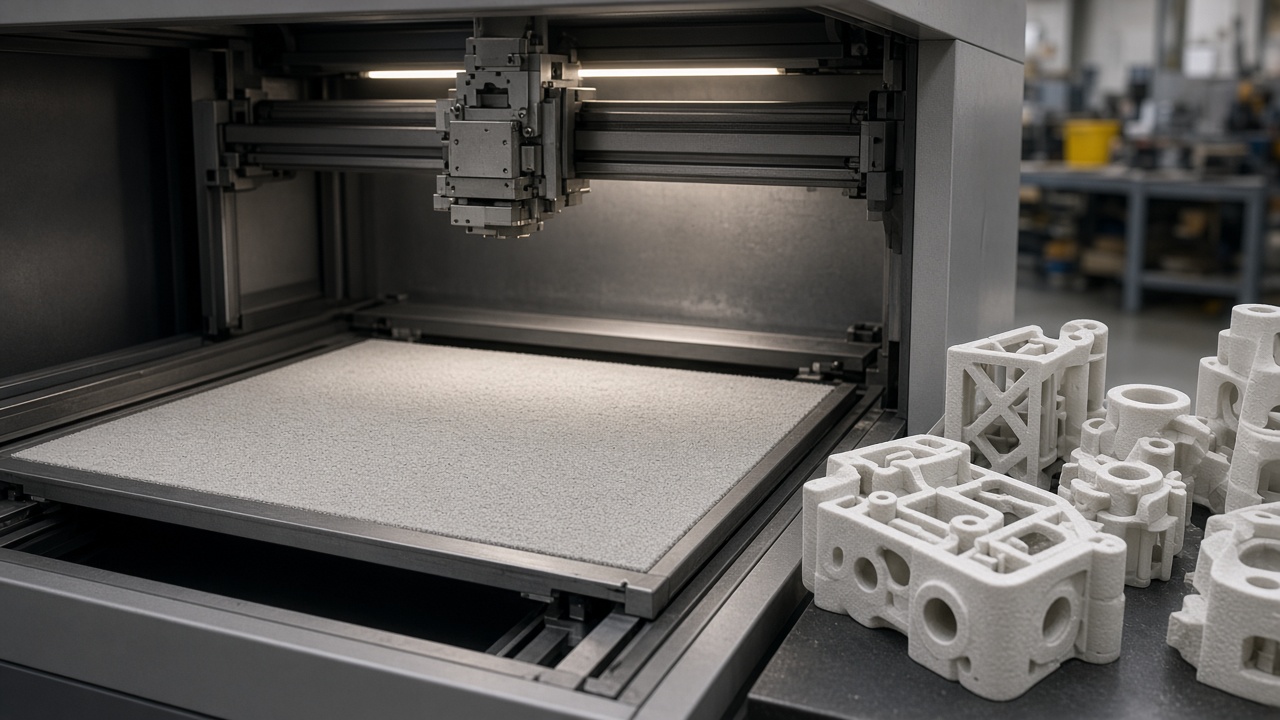
Core Advantages
Practical reasons buyers choose SLS for prototypes and short-run parts.
No Supports
Powder bed supports the part
Complex geometry without support scars
- •Internal channels
- •Living hinges (design-dependent)
- •Nested builds
- •Less post-cleanup
Nylon Toughness
PA12 / PA11 common
Functional mechanical parts
- •Impact resistance
- •Wear resistance (grade-dependent)
- •Snap fits
- •Housings
Batch Efficiency
Nest many parts per build
Cost-effective small lots
- •Shared build
- •Repeatable powder process
- •Good for 10–500 pcs
- •Bridge production
Finish Options
Cosmetic control after sinter
Blast, dye, infiltrate
- •Bead blast
- •Black/color dye
- •Vapor options (select)
- •Tapping inserts
Design Freedom
Undercuts OK in powder
Consolidate assemblies
- •Lattice options
- •Hinges
- •Cable routing
- •Lightweighting
Export Ready
China manufacturing
RFQ with quantity breaks
- •Material notes
- •DFM walls/holes
- •Packing
- •Freight
What we provide for SLS
Functional Prototypes
Load-bearing checks, snap fits, and wear trials in nylon.
PA12 standard
Workhorse nylon for most functional parts
PA11 options
When flexibility/impact needs differ
Filled grades
Glass-filled when stiffness is needed (availability varies)
Short-Run Production
Bridge lots while tooling is prepared or for spare parts.
Nested batches
Multiple SKUs in one build when possible
Dye consistency
Agree color standard for repeating lots
Insert ready
Heat-set inserts quoted on request
Finishing
Depowder, blast, dye, and light machining.
Depowdering
Bead blast
Dye
Secondary CNC on CTQs
Industries & Use Cases
We provide parts for commercial and industrial buyers. Soft capability language—no overclaimed regulated certifications unless stated on the PO.
Industrial Equipment
Covers, ducts, and brackets.
- •Guards
- •Cable clips
- •Manifold pilots
- •Jigs
Automotive Dev
Interior and under-hood pilots—not certified production claims.
- •Ducts
- •Clips
- •Brackets
- •Trim studies
Robotics
Custom mounts and end-effector pilots.
- •Sensor mounts
- •Cable guides
- •Covers
- •Fixtures
Consumer / Electronics
Durable housings and wear parts.
- •Cases
- •Hinges
- •Latches
- •Wear pads
Materials
Common grades we process; availability confirmed on quote.
Nylon Powders
- • PA12
- • PA11
- • Glass-filled PA (select)
Finishes
- • As-sintered
- • Bead blast
- • Dye (black / colors)
- • Infiltrate (select)
Quality & Inspection Notes
Practical QC aligned to RFQ callouts—not blanket aerospace claims.
Incoming checks
Material and build parameters verified against the order
In-process review
Spot checks on critical features during post-processing
Final inspection
Visual + dimensional notes per agreed CTQs
Export packing
Protective packaging for overseas freight
Documentation
Material notes and inspection records when ordered
Our Process
Submit CAD & requirements
Upload STEP/STL and tell us material, finish, and quantity
Quote & DFM notes
Process recommendation and manufacturability feedback
Build & post-process
Print/fabricate, then agreed finishing steps
Inspect
Check CTQs and cosmetics before pack
Ship
Export-ready cartons to your destination
Frequently Asked Questions
SLS vs MJF?
Both make nylon parts. MJF often offers more isotropic properties and different surface; SLS is widely used for durable prototypes. Share requirements—we recommend.
Can SLS be watertight?
As-sintered nylon is porous; infiltration or coatings help. Call sealing needs on the RFQ.
Minimum wall?
Often ~0.8–1.0 mm for reliable walls; thin features need review.
Color options?
Natural is typically off-white/gray; dye achieves black and other colors.
Heat and chemicals?
Nylon absorbs moisture and has grade-dependent chemical resistance. Name exposure environment.
Tolerances?
Often ±0.2–0.3 mm class depending on size; call CTQs and consider post-machining for fits.
Production volumes?
We provide short-run SLS. Very high volumes may favor molding or MJF economics—ask on quote.
Certifications?
Soft capability language only; no blanket aerospace/nuclear AM certs claimed.
SLS nylon sintering—service overview
SLS fuses nylon powder with a laser—no dedicated supports, good for complex functional parts.
Choose SLS for toughness and batch nesting versus fine cosmetic resin (SLA).
Partsproto provides SLS builds with dye/blast options and export packing.
- → Functional nylon prototypes
- → Complex geometry without supports
- → Short-run end-use nylon
- → Bridge before injection tooling
DFM tips for SLS
- •Escape holes help depowder trapped volumes.
- •Avoid extremely thin ribs that warp.
- •Account for dye darkening fine textures.
- •Call living hinge thickness carefully.
- •Mark press-fit diameters for possible ream/machine.
Inspection & QC
- ✓Depowder completeness check.
- ✓Dimensional spot checks.
- ✓Dye uniformity notes when colored.
- ✓Photos before export on request.
Lead time & batch sizing
Build schedule depends on nest fill and finish. Ask for 5 / 25 / 100 quantity breaks.
Ready to Start Your Next Project?
Send CAD, material, finish, and quantity—Partsproto returns process notes, price, and export lead-time guidance.