
Low Voltage Bus Bars for Switchgear
Low-voltage bus bars form the backbone of switchgear and distribution panels, carrying current between breakers, switches, and outgoing circuits. Partsproto fabricates copper and aluminum LV bus bars with CNC hole patterns, bends for tiered arrangements, and tin or silver plating—supporting MCC, distribution boards, and industrial panel builders who need cut-to-print quality without oversized lead times.
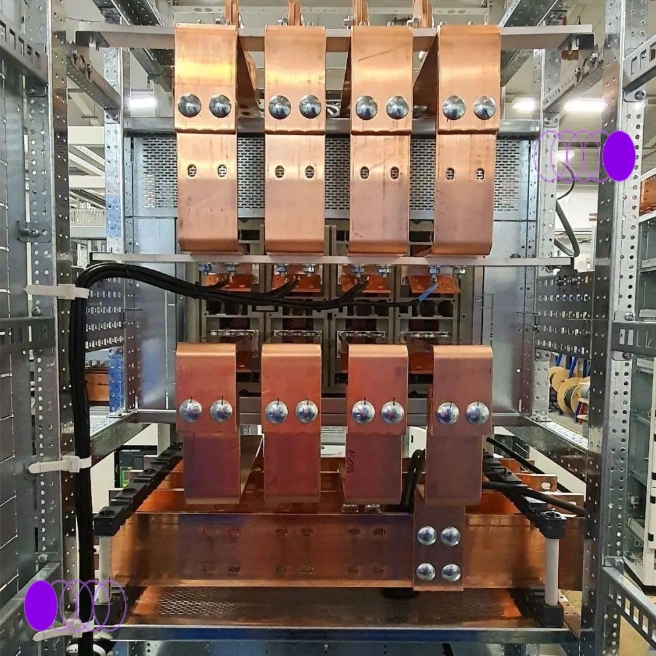
LV switchgear bus bar role
In low-voltage gear—commonly up to around 1000 V class depending on the standard—the bus bar system distributes power inside the enclosure with defined phase spacing, support insulators, and bolted joints to devices. Mechanical fit and thermal performance matter as much as conductivity.
Copper remains the default for compact high-current LV gear; aluminum is used when cost and weight targets allow larger sections. Tin plating is ubiquitous on bolted joints; silver appears on selected high-performance contacts.
Partsproto supplies the fabricated bars and finishes. Type-testing and switchgear assembly certification stay with the panel builder or OEM.
Support insulators, phase barriers, and shrouds interact with bar geometry. Even when we only supply the metal, knowing insulator hole patterns prevents drilling conflicts later on the panel line.
Fabrication for panel builders
We work from single-line-informed layouts or detailed bus drawings: phase bars, neutral, and earth as specified. Punching and CNC keep hole patterns consistent across phases so devices line up.
Edges are deburred; bends create risers between tiers. Plating follows forming when possible so coated surfaces stay intact. Insulation shrouds or heat-shrink may be added when the drawing requires.
Dimensional inspection against critical hole pitches and bend locations reduces panel-line surprises. Share device brands and centerline drawings when available.
Repeat orders benefit from frozen revision control. When a breaker footprint changes, bump the drawing revision and call out which holes moved—silent changes are how wrong kits get packed.
Ordering tips for LV bars
Provide voltage class context, current ratings per bar, material, finish, and support hole patterns. Phase color marking—if needed—should be called out.
For multi-tier gear, include a side-view showing bend offsets. Missing offset dimensions are a common RFQ blocker.
Request quotes at /contact with panel quantity and ship-to destination for export packing plans.
If you need heat-shrink sleeves, phase markers, or pre-mounted studs, list them as separate line items or clear notes. Ambiguous “insulate as needed” language forces a requote.
Working with switchgear and panel OEMs
OEM panel lines run on kits. Bars that arrive unlabeled or with mixed revisions slow the line more than a slightly higher piece price. We kit and label when you provide the packing list structure.
Short-circuit bracing and insulator selection are part of the switchgear design package. Fabricating a thicker bar does not by itself create a higher rated board. Use your standards and type-test references; we will match the metalwork.
Spare bars for field service should match the production revision. Ordering a small spare lot with the main kit is usually cheaper than an emergency one-off years later with lost drawings.
Send centerline drawings or full bus layouts via /contact for copper or aluminum LV kits.
Partsproto supports LV switchgear and panel OEMs with cut-to-print copper and aluminum bus kits packed for export assembly lines. Bring centerline drawings and finish callouts; we will fabricate the metalwork while you retain design and type-test ownership.
LV switchgear bus checklist
Provide phase/neutral/earth drawings or a centerline layout with device references, material, finish, and bend offsets for multi-tier gear.
List kit labeling needs and whether bars ship as matched phase sets. Panel lines move faster when kits arrive complete and marked.
Note any shrouds, heat-shrink, or stud hardware to include. “Supply like last time” only works when last time’s revision is attached.
Start at /contact for Partsproto LV bus fabrication quotes oriented to export panel builders—not type-test lab services.
Key Features
Discover the unique characteristics and advantages of Low Voltage Bus Bars for Switchgear
LV panel-ready geometry
Hole pitches and bends aligned to breaker and switch centerlines.
Copper or aluminum strategies
Copper for compact ampacity; aluminum when section growth is acceptable.
Tin and silver plating
Everyday tin for bolted joints; silver where contact performance demands it.
Tier and riser bends
Formed offsets for multi-level switchgear arrangements.
Optional insulation accessories
Sleeves or shrouds when drawings require extra protection.
Export packing for panel shops
Phase-labeled kits that arrive ready for assembly lines overseas.
Technical Specifications
Detailed specifications for Low Voltage Bus Bars for Switchgear
Materials
Dimensions
Voltage: LV class applications (typically up to ~1000 V per design rules)
Current: Quoted per section—up to multi-kA designs
Finish Options
Applications
Explore the various applications where Low Voltage Bus Bars for Switchgear excels
MCC and motor control
Horizontal and vertical bus systems feeding starters and drives.
Distribution switchboards
Main and distribution bars for commercial and industrial boards.
Industrial OEM panels
Machine and process line cabinets built for export.
Data-center power distribution
LV bus links in UPS and PDU-adjacent gear.
Commercial building risers
Floor distribution where aluminum or copper is specified.
Retrofit gear upgrades
Replacement bars matching existing device centerlines.
Advantages
- •Designed around LV panel assembly practice
- •Supports copper and aluminum
- •Plating options for joint quality
- •Bends for multi-tier layouts
- •Kit-friendly export packing
- •Prototype bars available before panel type-test
Limitations
- •Not a substitute for type-tested switchgear design
- •Voltage/current limits follow your standards and section
- •Insulation and shrouds must be specified
- •Final thermal and short-circuit design is OEM-owned
Frequently Asked Questions
Find answers to common questions about Low Voltage Bus Bars for Switchgear
What voltage range is 'low voltage' here?
We mean typical LV switchgear classes—often up to about 1000 V depending on the applicable standard. Your drawing and standard govern; we fabricate to the print.
Copper or aluminum for LV gear?
Copper when space is tight or tradition requires it. Aluminum when cost/weight matter and section can increase. Follow your switchgear design rules.
Can you supply full phase kits?
Yes—matched phase, neutral, and earth bars labeled for assembly when the BOM is clear.
Do you type-test switchgear?
No. We manufacture bus bars. Type-testing and certification of the assembled gear belong to the panel builder or OEM.
What plating is standard?
Tin is the everyday LV joint finish. Silver is quoted for specific contact requirements.
Lead time for LV bus kits?
Depends on bend complexity, plating, and kit size. Multi-week quotes are common; rush options discussed case by case.
How to get a quote?
Send bus drawings or centerline layouts via /contact with material, finish, and panel quantity. Phase spacing and insulator placement follow your switchgear standard—fabricating bars without the support drawing risks holes that miss insulator inserts.
Ready to Get Started?
Contact us today to discuss your Low Voltage Bus Bars for Switchgear requirements and get a customized solution for your application.